
The seemingly simple formula of the bracha we do everyday hides immense secrets
This introduction draws on more than twenty hours of my study of the formula of a blessing. It can identify the main questions, but further study requires the texts and concepts used in Otzrot Chaim.
On a simple level, the concept of the blessing is that by reciting it, a person praises the Blessed One (Hashem) and instills in their heart the sovereignty and dominion of Hashem, that everything belongs to Him. It also has the aspect of derech eretz (proper behavior) and honoring Hashem, where the person asks permission before using and benefiting from something that is not theirs but belongs to Hashem.
Let's go further here with the question: why do we use a bracha in the first place as opposed to a simple "thanks"?
We know there are many answers according to the Pshat (simple meaning). The Gemara Berakhot 35a there asks a question: In one verse (Psalms 24:1), it says "The earth is the Lord’s and its fullness," which implies that everything is in Hashem's domain, and a person has no right to benefit from the things of this world.
But in another verse (Psalms 115:16), it says "The heavens are the heavens of the Lord, but the earth He gave to the children of man," implying that Hashem gave permission for a person to enjoy the things of this world. The Gemara answers that this refers to before the blessing and after the blessing. through the blessing, Hashem grants permission for a person to enjoy the things of this world.
The concept of the blessing according to the secret of things is explained at length in the Zohar in Raya Mehemna (Parshat Eikev, page 211b):
The verse says, "And you shall eat and be satisfied, and bless the Lord your God." It is a commandment to bless the Holy One, Blessed be He, for everything one eats and enjoys in this world. If one does not bless, they are considered a thief in relation to Hashem. The verse states, "He who robs his father or mother is a companion to a destroyer" (Proverbs 28:24), where "father and mother" refer to Hashem and the Jewish People (the ZuN - Zeir Anpin and Nukva).
The reason it is called "robbing" is because the blessings (brachot) draw down sustenance from the external aspects of Aba and Ima (the Father and Mother) to Z"A and Nukva, so that they have the strength to ascend in the manner of MaN (Mayim Nukvin, feminine waters such as prayer, offering upward), and to draw down internal sustenance [Ma"d, Mayim Dukhin] from Aba and Ima to Z"A, and from them to the entire world.
If a person does not bless, they prevent this process and steal sustenance from all the [spiritual and material] worlds. Therefore, the verse says, "And you shall eat and be satisfied, and bless the Lord your God," meaning that by blessing, one draws sustenance to Hashem your God, which refers to ZuN, as mentioned.
From here we learn the great importance of reciting the brachot properly. Since the flow of blessings is drawn through the words of the blessing, one must say the words of the blessing with intention so that they can carry out the necessary action, which is to draw blessings from the upper source (Aba and Ima) to Z"A and Nukvah, as mentioned. By doing so, the upper and lower worlds will be blessed.
When one blesses the Holy One, Blessed be He, they draw sustenance to Z"A, as mentioned. The blessing and the flow of sustenance first rest upon the head of the person who blesses, and from there, the rest of the world receives the blessing. This explains the verse: "In every place where I cause My name to be mentioned, I will come to you and bless you" (Exodus 20:21), meaning that whenever My name is sanctified through the blessing, I will come to you and bless you, meaning the blessing first comes to the one who blesses and then to everyone else.

List of Brachot (blessings)
Well, we have blessings for everything. As our sages teach (Brakhot 35a) "It's forbidden to derive pleasure from this world without a blessing". The 82 total number of brachot we have are divided into 4 categories (with variations on the Kavanot) as follows:
1. Blessings for Mitzvot that require action
- על נטילת ידים - On the washing of hands
- להתעטף בציצית - To wear tzitzit
- להניח תפילין - To lay tefillin
- מילה - Circumcision
- פדיון הבן - Redemption of the firstborn
- מעקה - Building a guardrail
- מזוזה - Mezuzah
- טבילת כלים - Immersing utensils
- כיסוי הדם - Covering the blood
- הפרשת חלה - Separating challah
- שחיטה - Slaughtering
- ברכת אירוסין - Blessing of betrothal
- הפרשת תרומות ומעשרות - Separating tithes and offerings
- עשיית מעקה - Building a guardrail
- פדיון הבן - Redemption of the firstborn
- פטר חמור - Redeeming a donkey
- נטע רבעי - Fourth-year fruit
- טבילת הגר - Conversion immersion
- טבילת כלים - Immersing utensils
- עירוב תבשילין - Eruv Tavshilin
- עירובי חצירות - Eruv Chatzerot
- הדלקת הנרות - Lighting the candles
- קידוש - Kiddush
- תקיעת שופר - Blowing the shofar
- לישב בסוכה - Dwelling in the sukkah
- נטילת לולב - Taking the lulav
- הדלקת נר חנוכה - Lighting the Hanukkah candles
- ביעור חמץ - Burning the chametz
- אכילת מצה - Eating matzah
- שתית ד' כוסות - Drinking the four cups
- אכילת מרור - Eating maror
2. Blessings for Mitzvot which don't have an action
- לעסוק בדברי תורה - To engage in words of Torah
- הלל - Hallel
- מגילה - The Megillah (Scroll of Esther)
- ספירת העומר - Counting the Omer
- ברכת כהנים - Priestly Blessing
3. Blessings for praises and thanks
- אשר יצר - Who created (the human body)
- הנותן לשכוי - Who gives sight to the blind
- עד ברכת התורה - Until the blessing of the Torah
- ברוך שאמר - Blessed is He who spoke
- יוצר - Creator
- ברכות התורה - Blessings of the Torah
- לעולה לתורה - For the one called to the Torah
- ברכת אשר בדברו - Blessing of "Who speaks"
- מעריב ערבים - Who brings on the evening
- שבע ברכות - Seven blessings
- ברכת הגומל - Blessing of the one who gives thanks
- ברכת הטוב והמטיב - Blessing of the good and benefactor
- עושה מעשה בראשית - Who creates the work of creation
- שכוחו וגבורתו מלא עולם - His strength and power fill the world
- זוכר הברית - Who remembers the covenant
- דין האמת - The judge of truth
- שעשה לי נס במקום הזה - Who performed a miracle for me in this place
- שחלק מחכמתו ליראיו - Who shares His wisdom with those who fear Him
- שנתן מחכמתו לבשר ודם - Who gave His wisdom to flesh and blood
- שנתן מכבודו לבשר ודם - Who gave His honor to flesh and blood
- מציב גבול - Who sets boundaries
- אלמנה - The widow
- אשר יצר אתכם בדין - Who created you in judgment
- משנה הבריות - Who changes His creatures
- שככה לו בעולמו - Who made it so in His world
- עושה הים הגדול - Who made the great sea
- ברכת בורא מאורי האש - Blessing of the Creator for the lights of fire
- ברכת המבדיל - Blessing of the One who separates
- קידוש לבנה - Kiddush Levana
- שהחיינו - Who has kept us alive
- שעשה ניסים - Who performed miracles
- אשר גאלנו - Who redeemed us
4. Blessings for pleasure
- המוציא - Who brings forth (bread)
- ברכות המזון - Blessings of food (Birkat HaMazon)
- מזונות - Mezonot (Blessing for food made from wheat)
- הגפן - The grapevine
- העץ - The fruit tree
- האדמה - The earth
- שהכל - Who creates everything
- בורא נפשות - Who creates souls (after all foods)
- ברכה מעין שלוש - A blessing similar to the three
- בורא עצי בשמים - Creator of fragrant trees
- הנותן ריח טוב בפירות - Who gives a good fragrance in fruits
- בורא מיני בשמים - Creator of various spices
- בורא עשבי בשמים - Creator of fragrant herbs
- בורא שמן ערב - Who creates fragrant oil
What exactly is the Matbeah Ha"Bracha?
The Matbeah Ha"Bracha is essentially the series of kavanot we use during the recitation of the Bracha that depict the entire process of sifting the Berurim and bringing down Mokhin D'Gadlut which consists of:
- From Barukh to Eloheinu – Bringing down the Mokhin of Yenika all the way from:
- Keter Eliyon to Atik Yomin
- Atik Yomin to Arich Anpin
- Arich Anpin to Abba and Immah
- Abbah and Immah to Zeir Anpin
- Melekh HaOlam – Accepting the 4 Mitot Beit Din
- Elevating all the Berurim of that particular Avodah from
- Beriyah, Yetzirah and Assiyah to Zeir Anpin and Nukvah of Atzilut
- Zon of Atzilut to Abbah and Imma
- Abbah and Imma to Arich Anpin
- Arich Anpin to Atik Yomin
- Atik Yomin all the way to Adam Kadmon
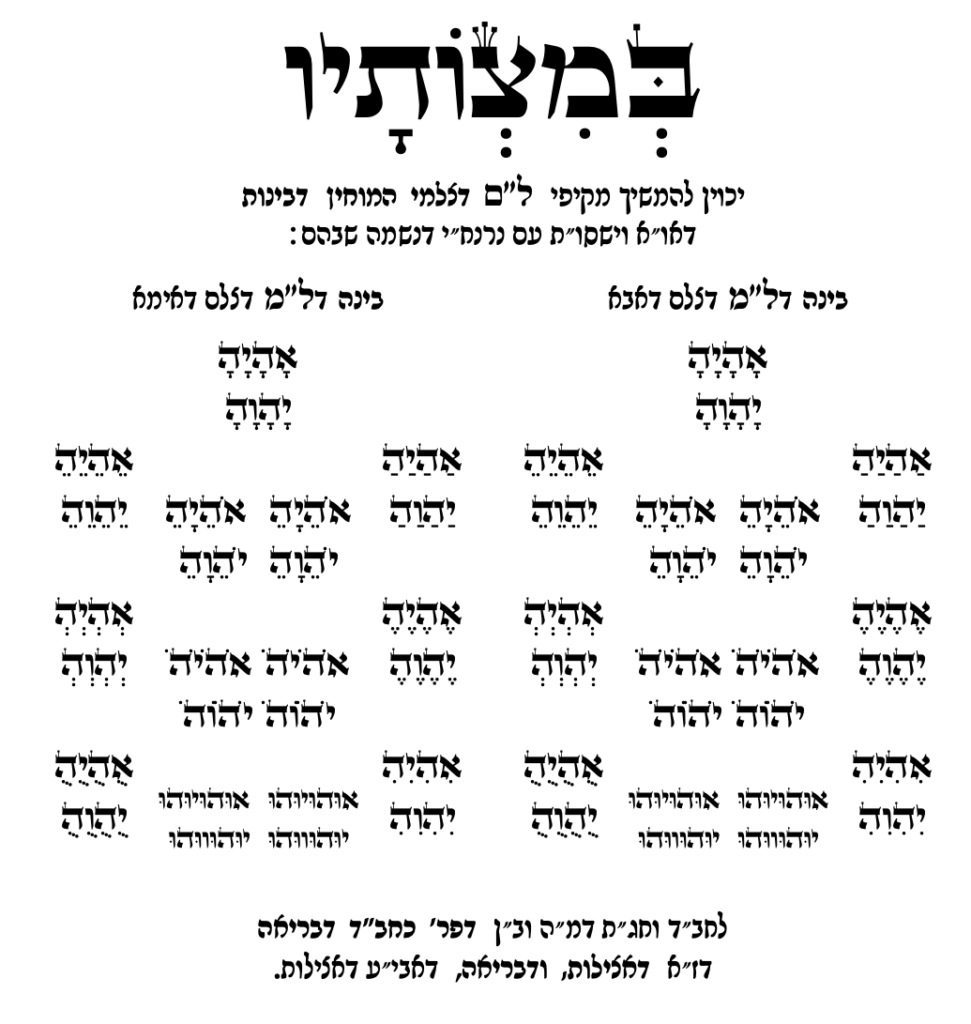
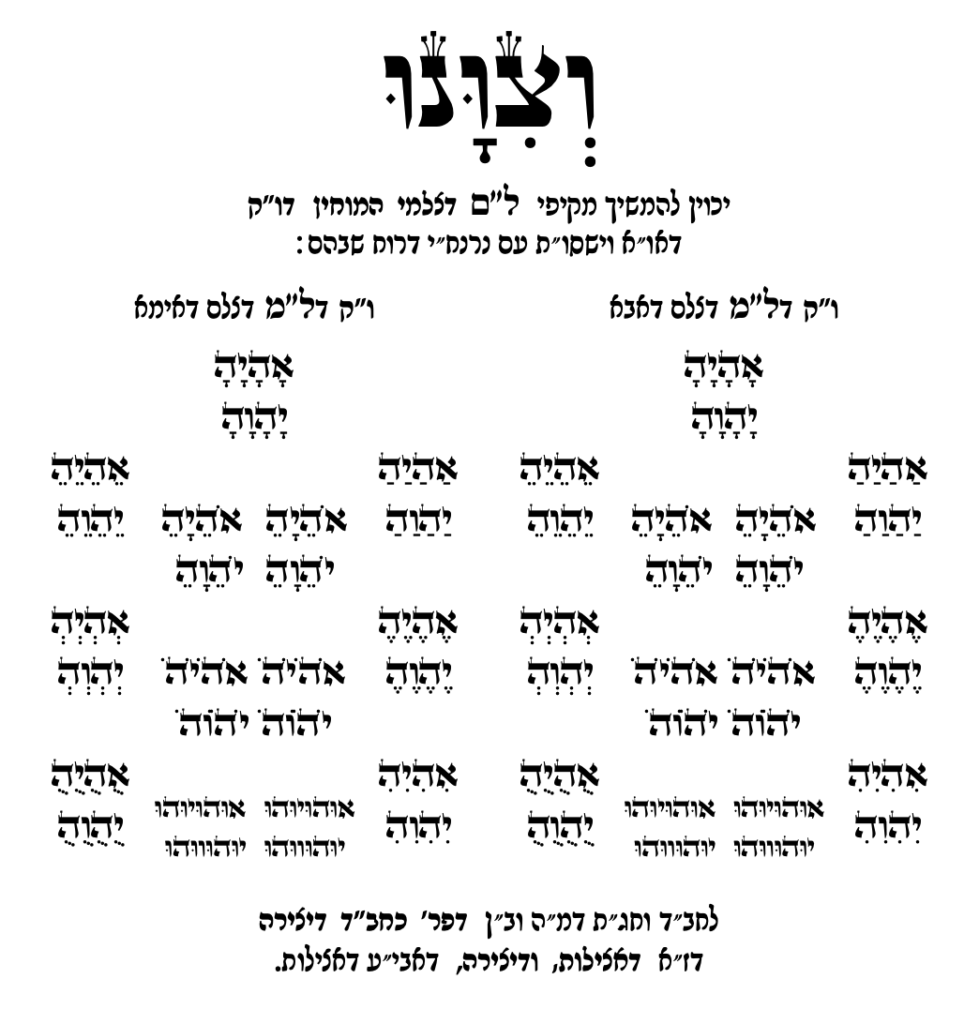
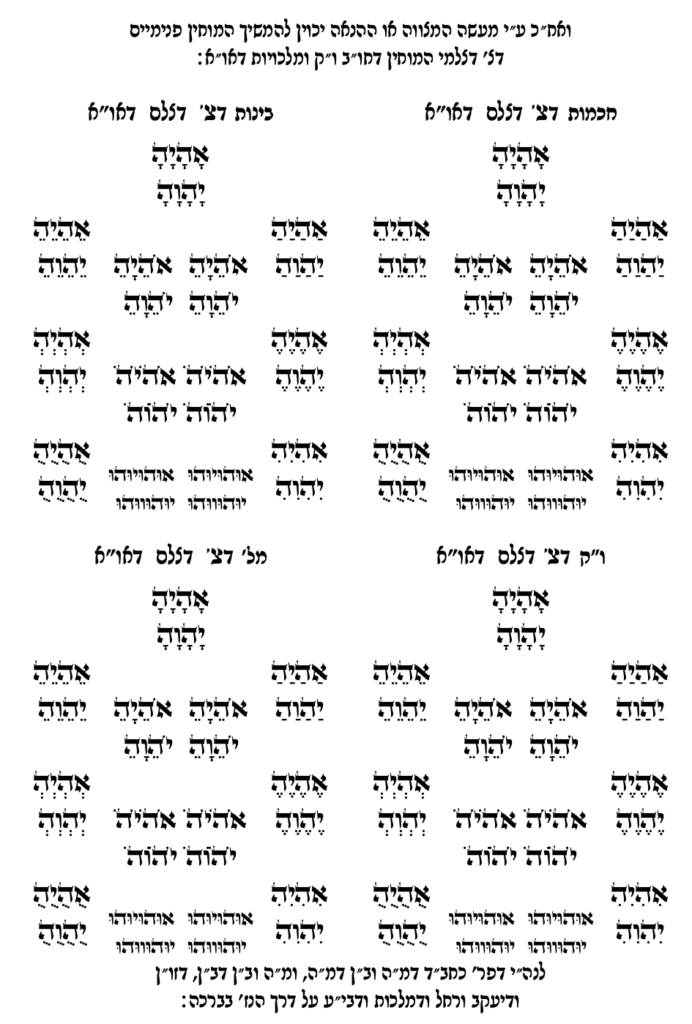
- Generating Mokhin D'Gadlut from Adam Kadmon all the way down to Zeir Anpin which includes a full צלם as follows:
- ם: the higher Makif
- ל: the lower Makif
- צ: the Pnimi
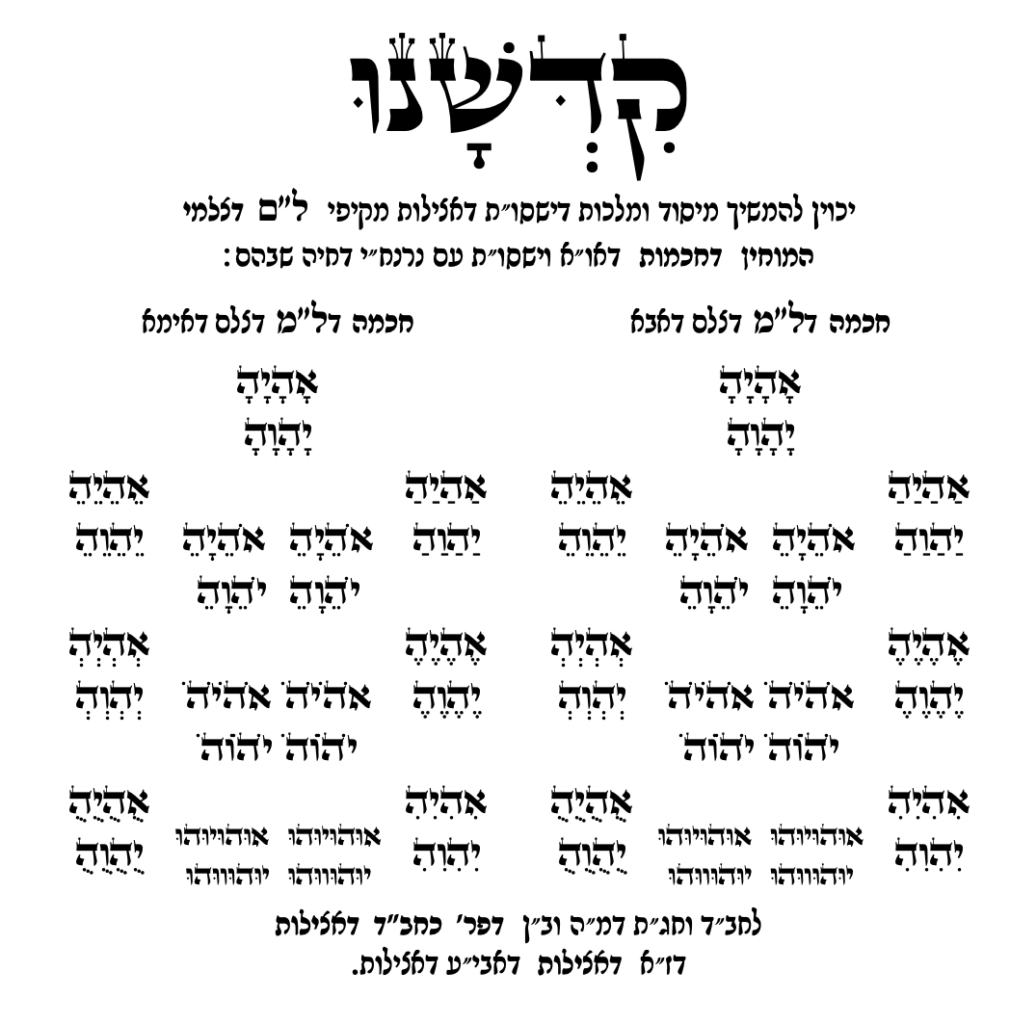
We will see the kavanot of the Matbeah Ha"Bracha as is printed in most Kabbalah Siddurim at the end of the article. Keep in mind that there are some differences between each of the 4 categories above, which we won't discuss here in this article.
Source for the Matbea Bracha
The Kavanot for the blessings were brought in the teachings of the Arizal in the Sha'ar HaKavanot (page 3a), in the Sha'arei Mitzvot (Parshat Ekev), and in the Sha'ar Maamarei Rashbi (Parshat Ekev). The main points of the intentions brought in these three sources have been briefly written in the Pri Etz Chaim, Sha'ar HaBerachot (Chapters 1-3), and they are explained in detail in the wonderful Sefer Ner Shalom (pages 20a - 22a) and in the Siddur HaArizal.
Through these sources we will have a general idea of what the Matbeah Ha"Bracha entails. The astute student will then be able to devote time to study each of the words of the Bracha in-depth with the appropriate material later.
The Kabbalah of Blessings
From the Zohar: Through reciting the blessing, the breath of the blessing rises with the holy spark, and all the ministers over the palaces above announce in all the heavens, "This is the gift that so-and-so has sent to the King," because through the blessing, the person elevates the holy sparks, which are the gift, as mentioned. And through this, the flow of blessings descends to the world, which is the mochin kadishin (holy intellect), as explained. It is also written there that a complete blessing is one that is answered with Amen. Thus, this is the shortened version of the discussion, as mentioned.
The Arizal explains:
Therefore, the matter of the blessing, in addition to the gratitude and recognition mentioned earlier, also involves the drawing down of spiritual abundance to Zeir Anpin and Nukvah. We will learn further, G-d willing, that this abundance is the 'mohin de-Yenika' (the intellectual light of nurturing), which gives strength to Zeir Anpin to elevate the clarifications (the ‘birurim’) to the level of M"n (the spiritual service of prayer and requests), following the well-known order until the highest heights (in Adam Kadmon).
This causes a union in all the partzufim (spiritual configurations), and draws down inner abundance from the internality of Abba and Imma (the father and mother), which are the intellectual lights of the greatness of Zeir Anpin. Through this, a union is caused for Zeir Anpin, and abundance is drawn to all the worlds.
Anyone who desires to enter into this holy study and ascend through it in the house of G-d’s vineyard, one of the conditions is to say the blessings with great intention, for this is a great key to enter through the gates of holiness.
In the Zohar (Parshat Pekudei, 288a) we learn that anyone who knows how to be Mekaven (use the Kavanot) and does so is proclaimed in heaven as one who fears G-d and meditates on His name and is written in the Book of Hashem. But anyone who is lazy in this and does not consider the honor of his Creator, G-d forbid, it is better that he was not created than that he was created.
Since we are in a generation that is weak both physically and mentally, and not every moment is the same, and reality shows that even though Heaven has granted a person the ability to learn the Kavanot, to understand them thoroughly, and how to focus them, not always does a person have the proper calmness of mind to concentrate. Which is fine, the important thing is to not give up and try your best.
Therefore, it is better to try to focus according to one’s state and ability. If he is in a state of katnut mochin (small intellect), he should at least focus on the general meaning and say the blessing properly. If he is able to do more, he should focus more. The main thing is to draw with the thought a connection to Hashem through what he is focusing on.
However, one should not put himself under pressure or fear that there will be a complaint from Heaven about his lack of focus, etc. Hashem has mercy on us, like a father has mercy on his beloved son. Our holy Torah is a Torah of life, its ways are ways of pleasantness, and all its paths are peace. Hashem does not come with complaints against His creatures [when they try to fulfill His will].
All the strictness that Rabbi Shimon bar Yochai wrote is for the people of high standing, for whom there is a flaw if they neglect this. However, we, in this generation, are like orphans, and every effort a person makes with all his heart for the honor of Hashem is very precious in His eyes.
"We also found in Sha'ar Ruach HaKodesh (page 9b) that Rabbi Chaim Vital wrote a wonderful and awe-inspiring expression regarding the importance of blessing with intention. He cautioned as follows, quoting the Arizal z"l:
"One who blesses with intention and focuses on the words of the blessing will draw down holy illumination upon his soul, and through this, will rise in sanctity and holiness. When one does not bless with intention, he remains in the lower aspects of his soul, and the light does not shine upon him."
In Sha'ar HaMitzvot (Parshat Eikev), it is written as follows:
"Whoever is careful to bless with intention and to sanctify his soul through the words of the blessing, will merit to connect with the upper worlds and draw down divine abundance. If, however, he neglects the blessing and does not focus on it, he will lose the opportunity to draw down this light."
It pays to remember that not all blessings are the same, even when it's the same person and the same type of blessing since the mazalot are constantly changing.
Now, let's begin learning about the Matbea Bracha!
The Kavanot of Matbea Ha"Bracha
Starting with Barukh to bring down the light of Yenika from Keter Elyon (which some say is Malkhut of Akudim):
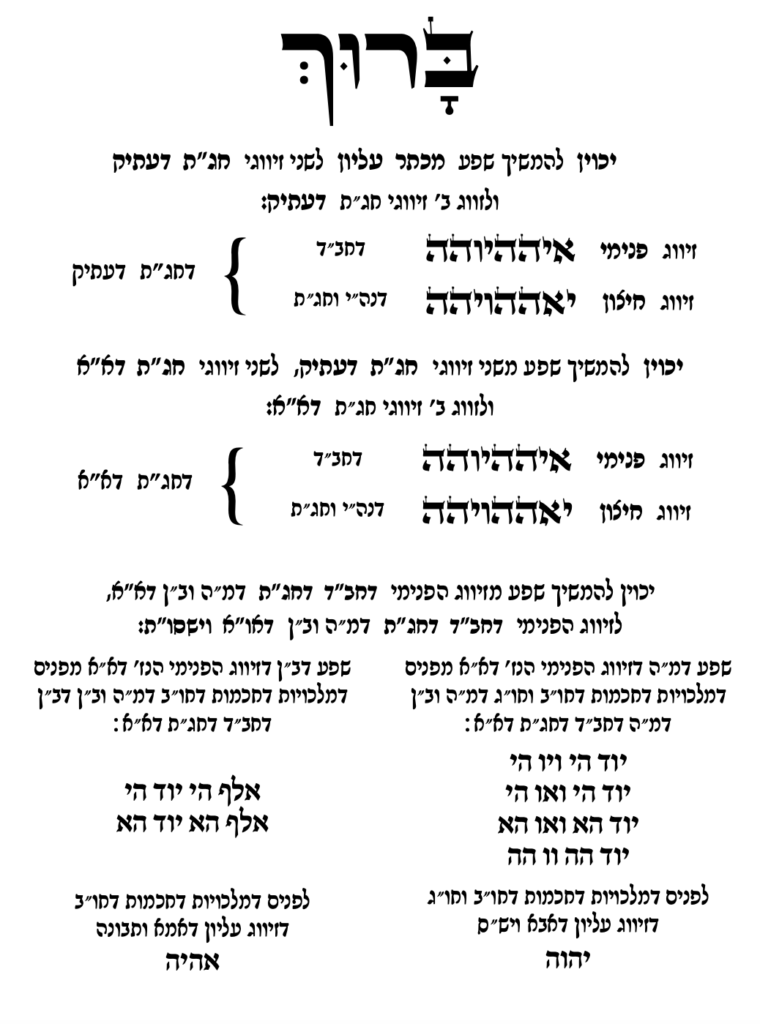
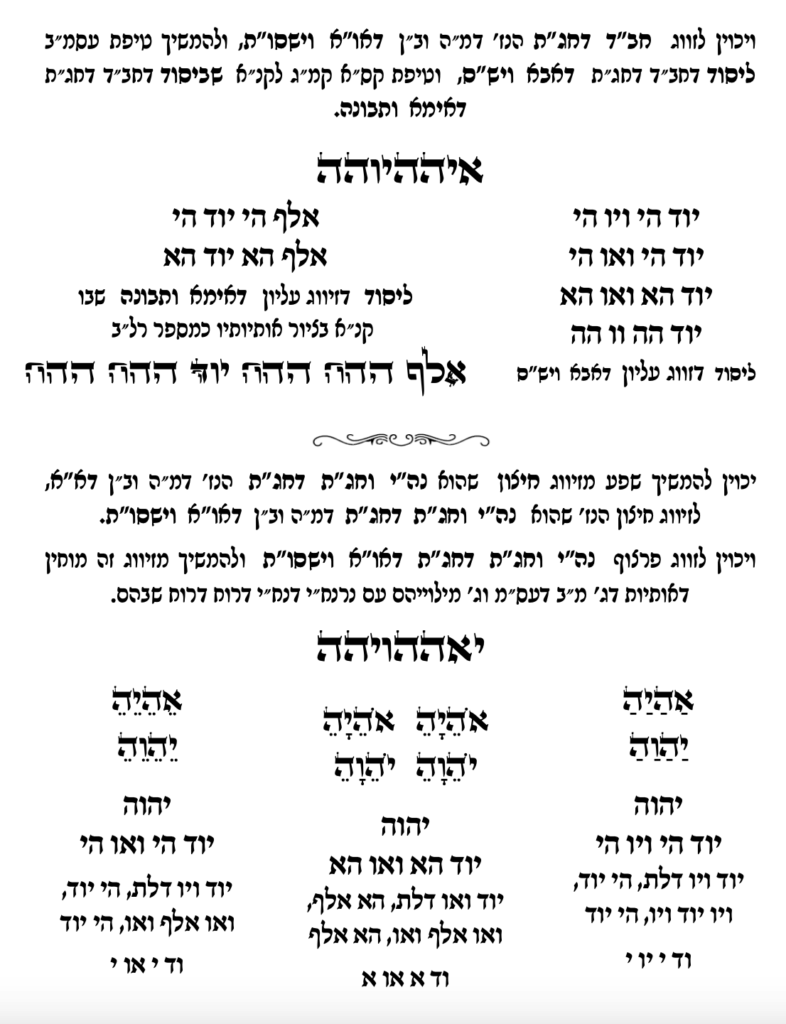
During Ata there is a zivug between Abba and Immah to bring down the Mokhin of Yenika of the right column:
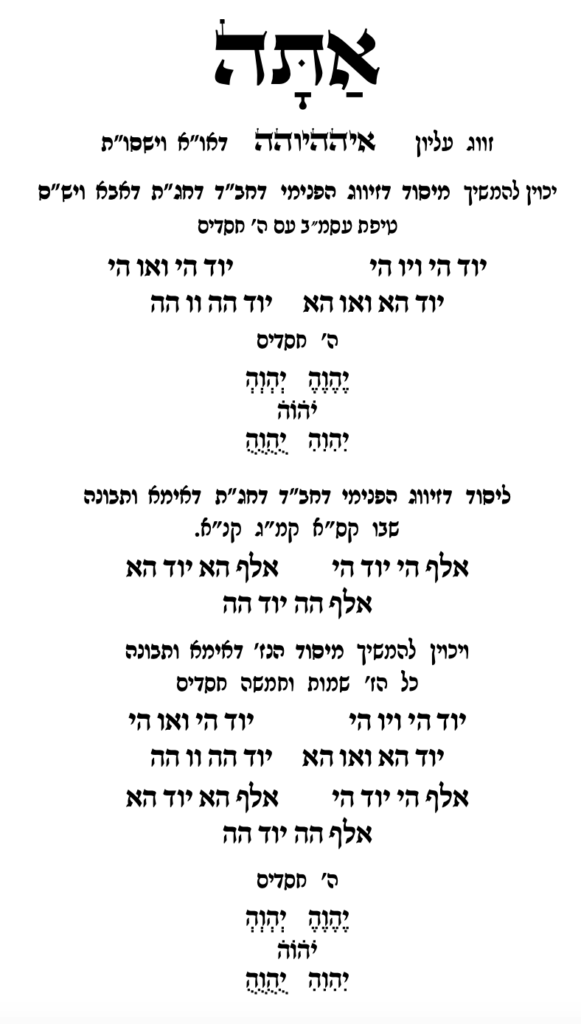
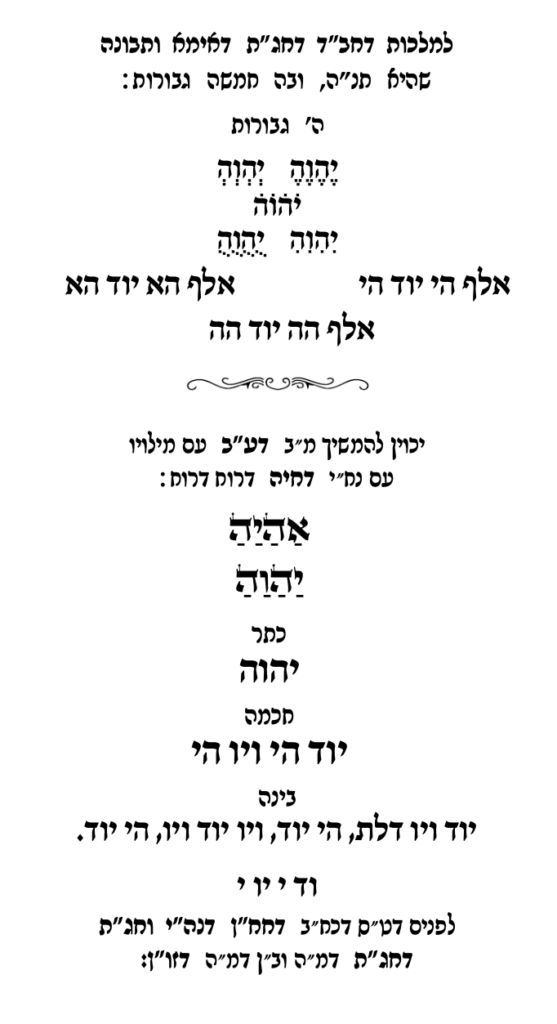
Middle column during YHVH:
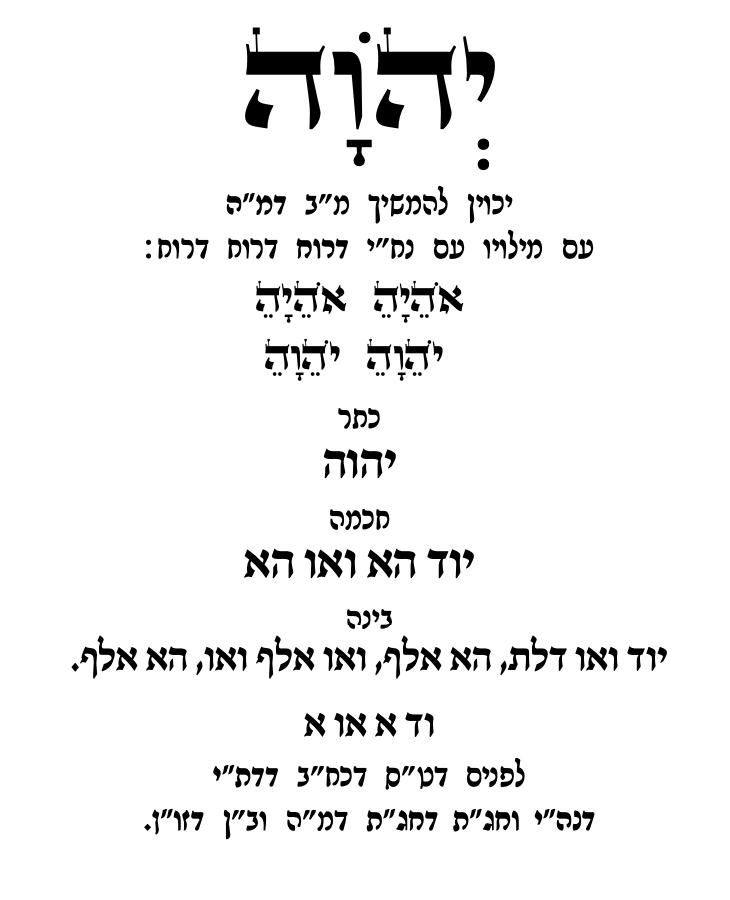
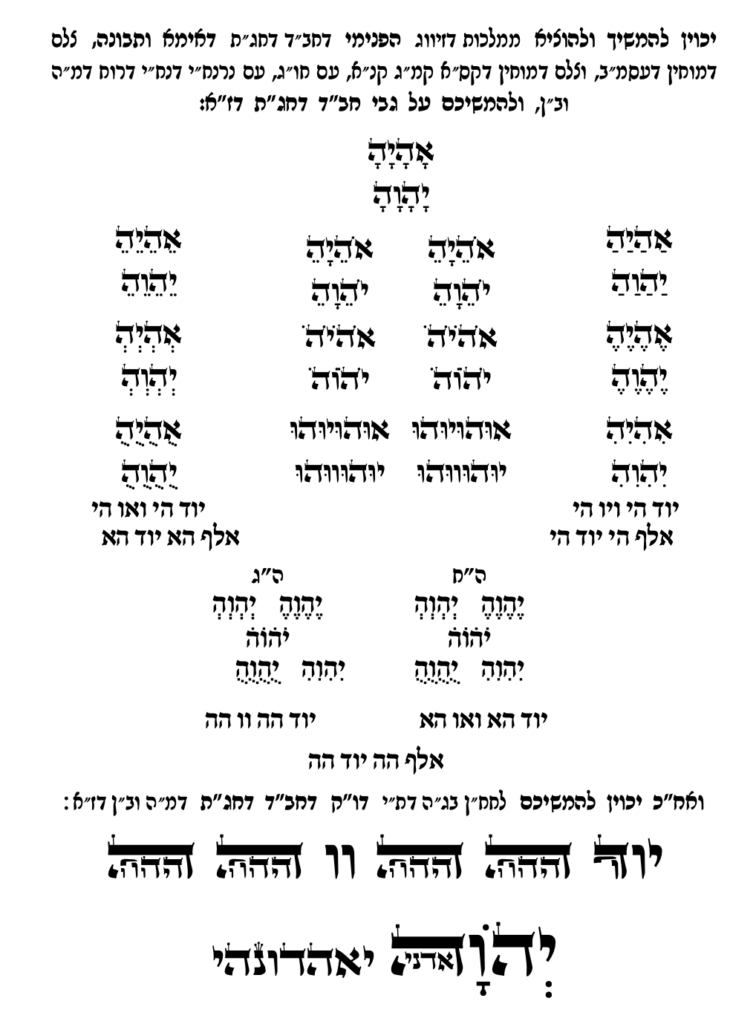
Left column with Eloheinu:
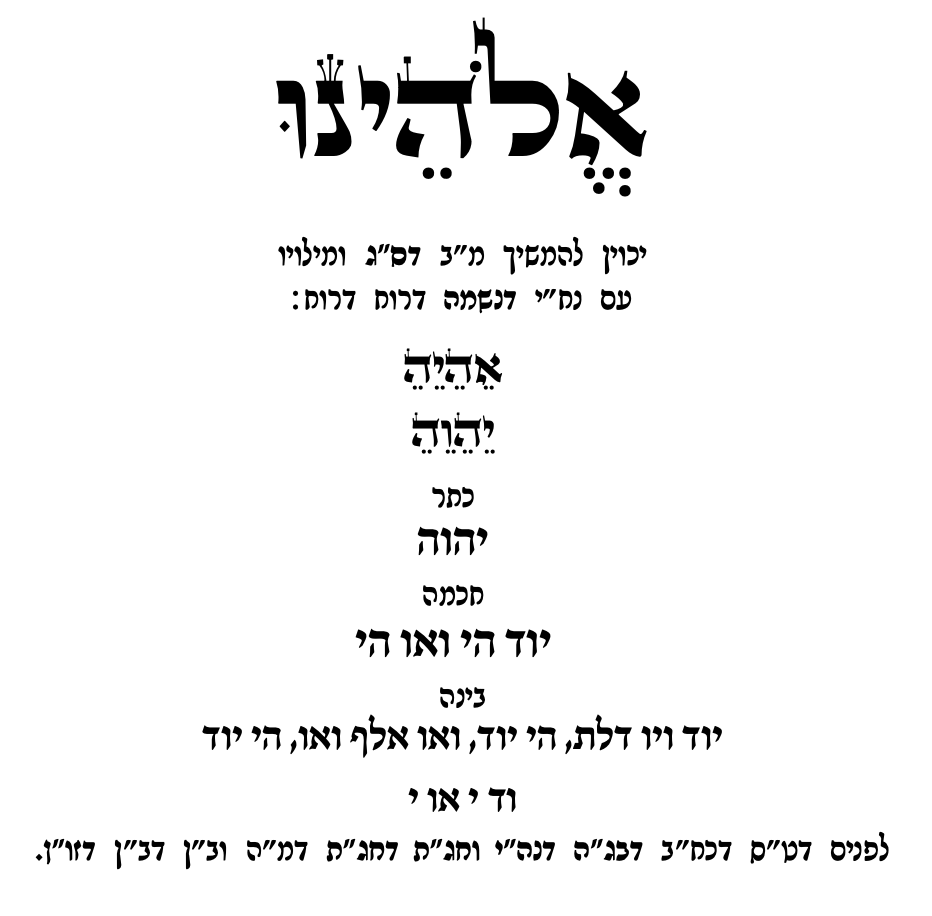
Receiving the 4 Mitot Beit Din during Melekh HaOlam and elevating the mokhin of Yenika we brought for free so far, plus all the berurim of the particular avoda we are engaged in:
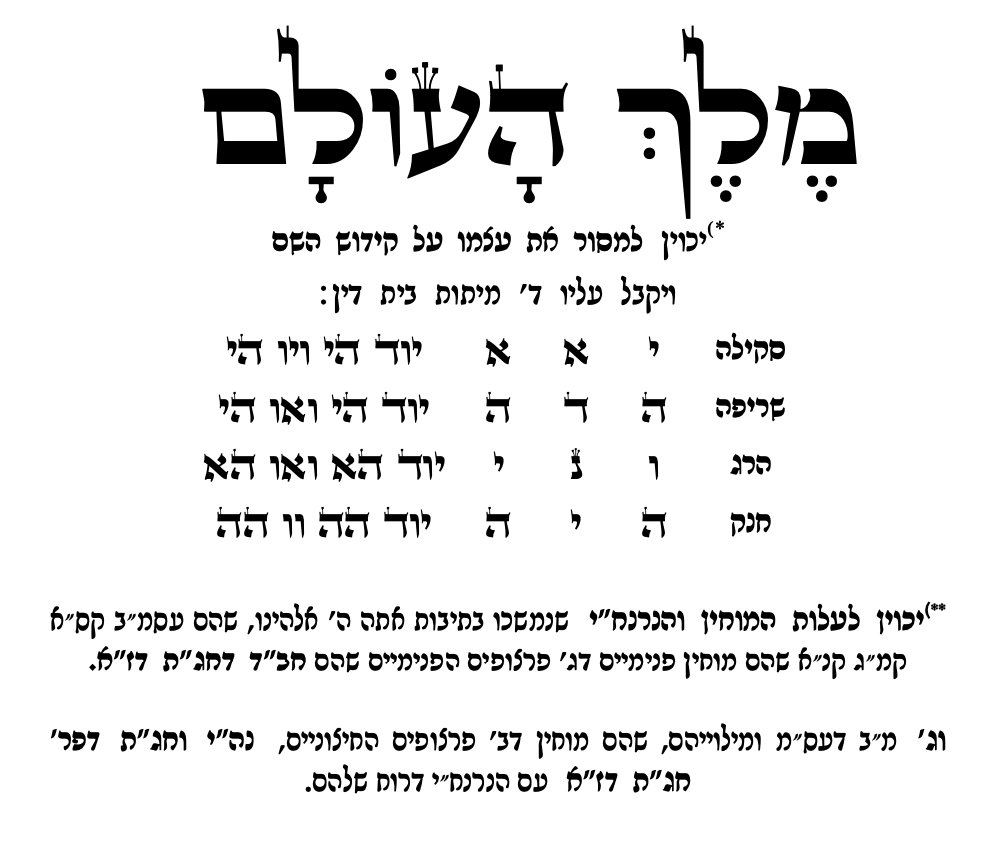
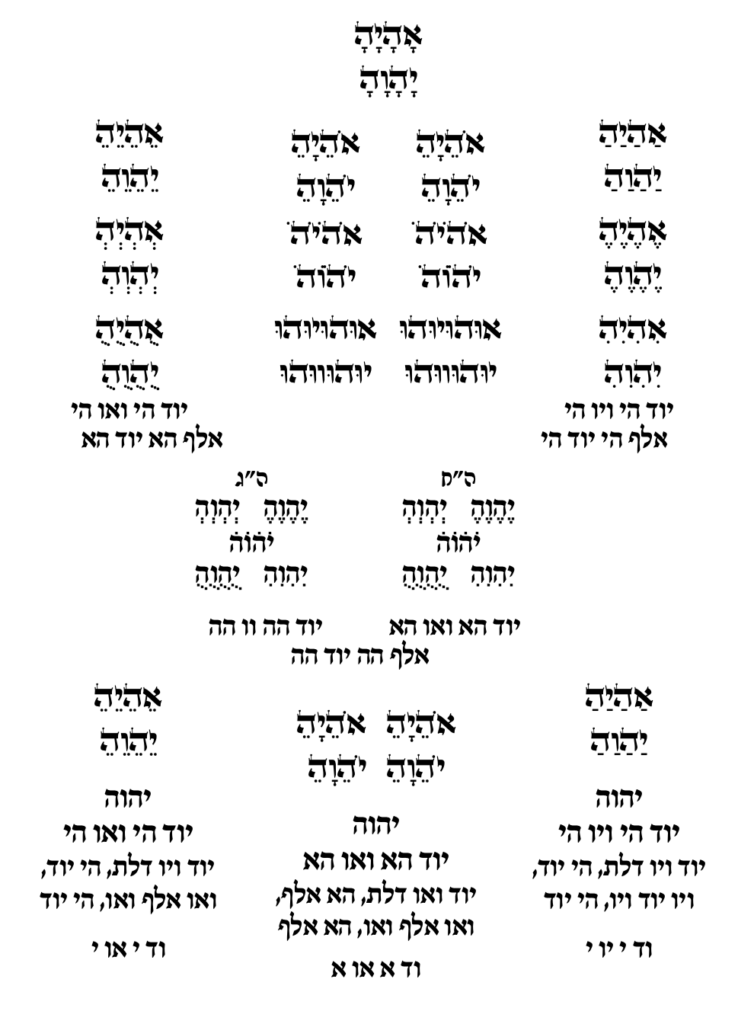
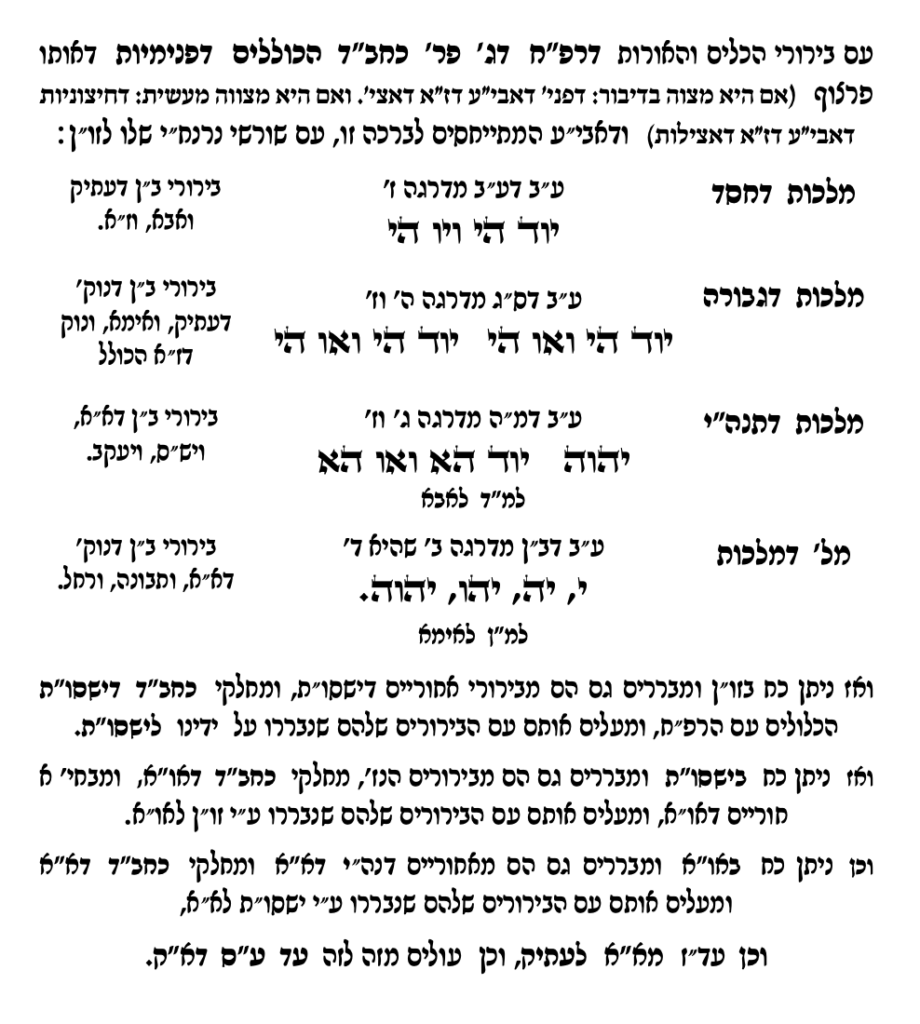
The highest point possible is A"b and Sa"g of Adam Kadmon, when new Mokhin of Gadlut is generated:

At Asher we bring back all the Mokhin of Yenika back to place. This happens even when we don’t have this word in the blessing:
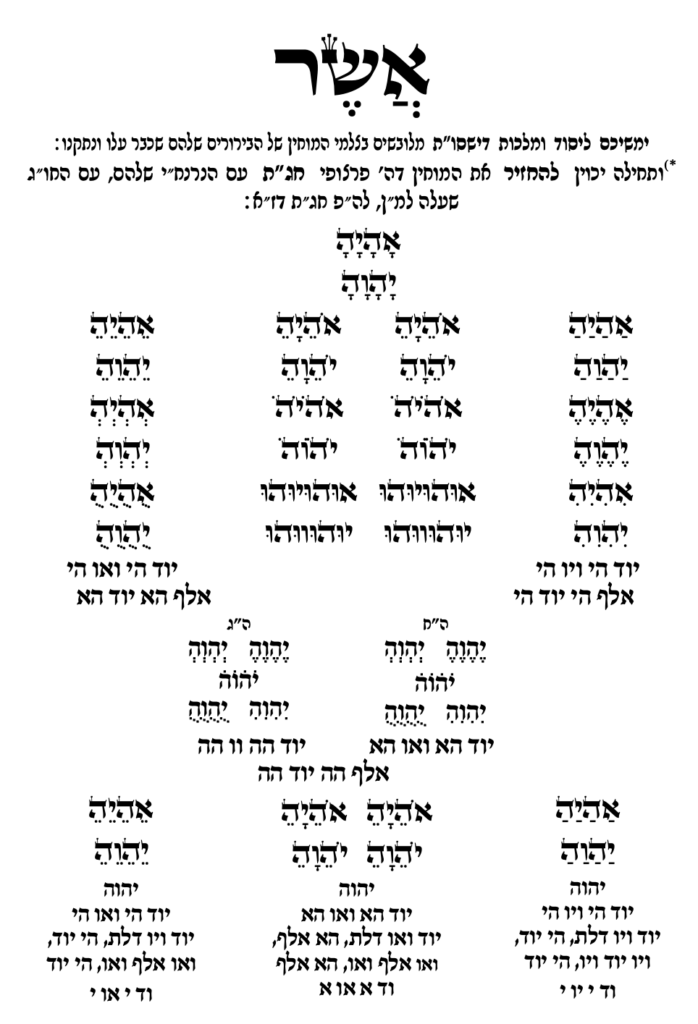
Kidshanu: Bringing down the Makifim of Chokhmah of the ל and מ (this happens even when we don’t have this word):