
The name most people associate with Safed is the Arizal. But in the years before he arrived, Safed already had a master of Kabbalah who had done something unique: he had gathered the scattered teachings of earlier centuries and organized them into a system. That master was Rabbi Moshe Cordovero (1522-1570), known by his initials as the Ramak.
His life
The Ramak lived and taught in Safed, then one of the great centers of Torah in the world. He studied Halacha with Rabbi Yosef Karo, the author of the Shulchan Aruch, and Kabbalah with Rabbi Shlomo Alkabetz (the author of Lecha Dodi), who was also his brother-in-law. He headed a Kabbalistic academy in Safed and held a circle of students that included some of the great figures of the next generation.
He died in 1570, a few months after the Arizal arrived in the city. Their meeting was brief, and the tradition records that the Arizal spoke of him with great respect.
Pardes Rimonim
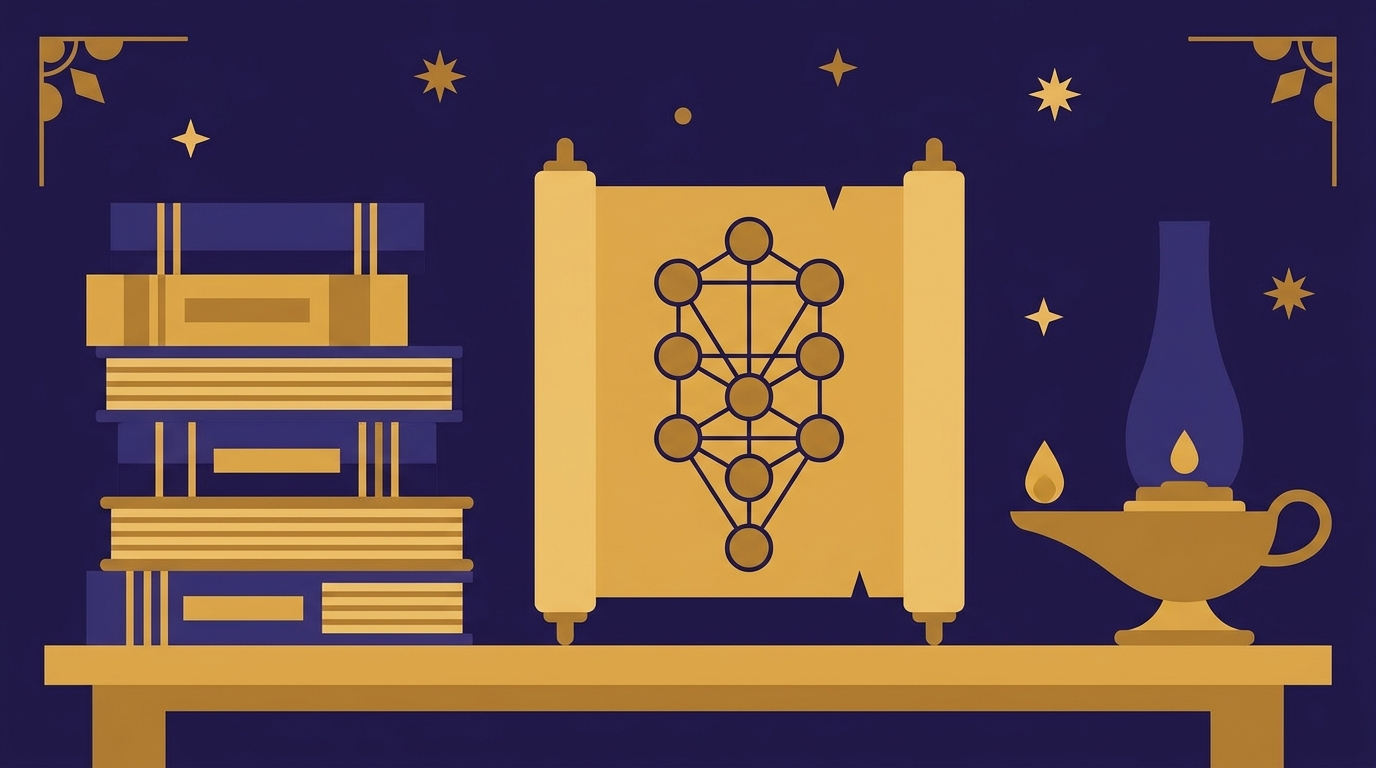
His first major work, Pardes Rimonim (“Orchard of Pomegranates”), was completed in 1548, when he was in his twenties. It is a systematic treatment of the Kabbalistic concepts known up to that time. It describes the sefirot (Divine attributes), the Divine Names, the soul, and the letters, and it quotes the Zohar and the earlier Kabbalists at length. Before this book, the subject had to be pieced together from many sources. After it, there was a framework a student could study.
Or Yakar and the other works
His largest work is Or Yakar (“Precious Light”), a long commentary on the Zohar. He also wrote Elimah Rabbati, a further study of the sefirot, and Or Ne’erav, a book on how and why to study Kabbalah, which defends the subject against its critics and describes the preparation it requires. His ethical work, Tomer Devorah, is the most widely read, since it translates the sefirot into conduct and is accessible to nearly any reader.
The Ramak and the Arizal
The two great systems of Safed are sometimes presented as rivals, but the tradition views them as complementary. The Ramak’s approach is analytical. He takes the sefirot as a set of structures and describes how they relate. The Arizal’s approach is dynamic. He describes the process by which the worlds came into being and are repaired, through tzimtzum (contraction), the breaking of the vessels, and tikkun (repair). In the generations after them, students studied both, and it was said that the Ramak’s work was the foundation on which the Arizal’s could be understood.
Why he matters
The Ramak gathered what had been passed down and set it in order. The Arizal’s later teachings had more to stand on because of it.
A student who wants to start with his work should consider Tomer Devorah first, since it requires the least background. Those who have studied the basics of the sefirot can move on to Pardes Rimonim, which rewards slow reading. The Arizal’s own system is covered in The Arizal and the Mystical Capabilities of the Mind, and the Tree of Life in Part 1.