

Every Friday evening, in synagogues of every community, the congregation turns toward the door and sings. The hymn is Lecha Dodi (“Come, my Beloved”), and few people realize that it was written in the sixteenth century by a Kabbalist of Safed, Rabbi Shlomo HaLevi Alkabetz.
The man and his circle
Rabbi Shlomo Alkabetz (c. 1500-1580) was born in Salonika and settled in Safed, where he became part of the circle around Rabbi Moshe Cordovero (the Ramak), his brother-in-law, and later the Arizal’s circle. He wrote commentaries on Esther, Ruth, and Song of Songs, and his name is recorded in the story of the night of Shavuot in Safed, when he and Rabbi Yosef Karo stayed awake learning and heard a voice speak through Rabbi Yosef Karo. Alkabetz left an account of that night.
Going out to greet the Queen
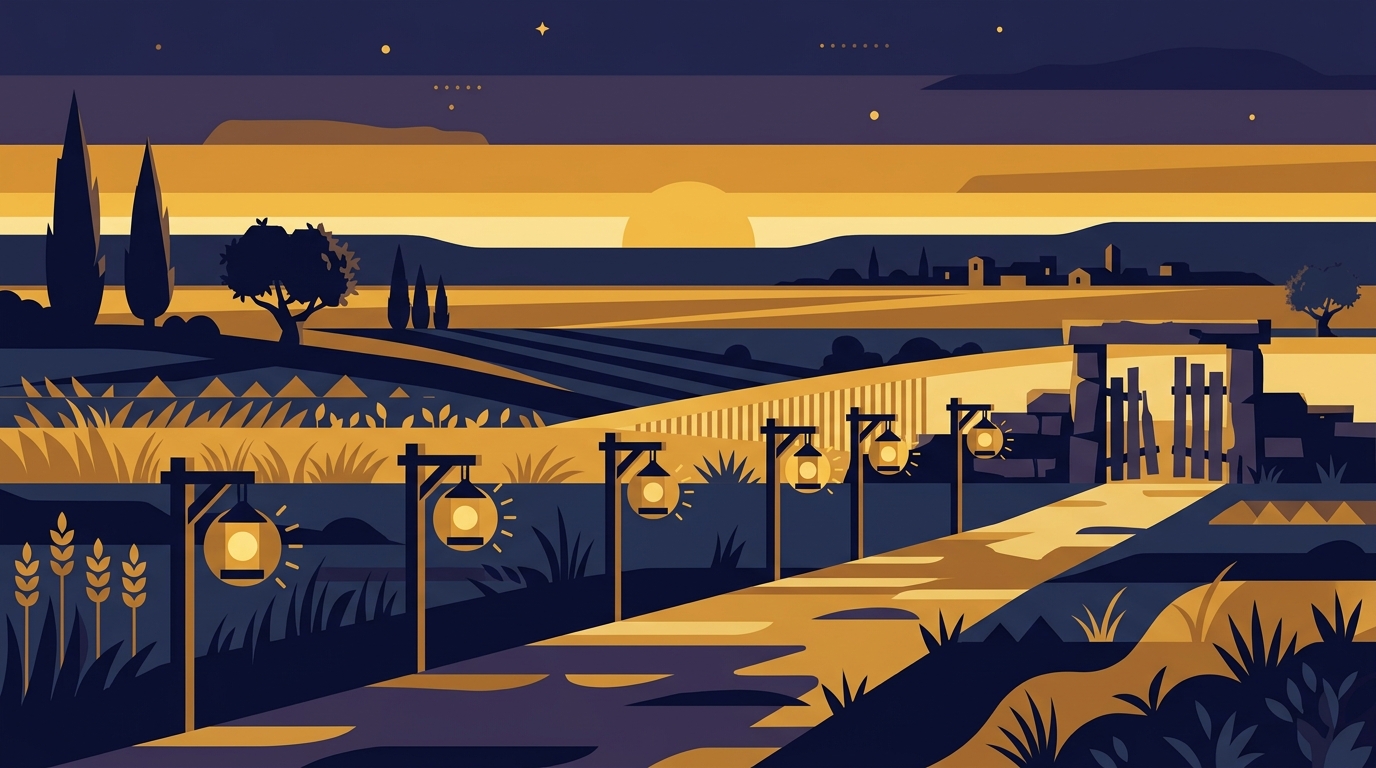
The roots of the custom are in the Talmud. Shabbat 119a records that Rabbi Chanina would wrap himself in his robe at sunset on Friday and say, “Come, let us go out to greet Shabbat the Queen.” Rabbi Yannai would put on his robe and say, “Come, O bride, come, O bride.” The Kabbalists of Safed took this literally. On Friday afternoon they went out to the fields outside the city, dressed in white, to receive the Shabbat. Alkabetz wrote Lecha Dodi for that walk, and it spread across the Jewish world within a generation.
How the hymn is built
The first letters of the first eight stanzas spell out his name, Shlomo HaLevi. The song has nine stanzas, and the congregation turns to face the entrance for the last one, when it says, “Come, O bride.” The refrain, “Come, my Beloved, to greet the bride; let us receive the presence of Shabbat,” addresses the Holy One, blessed be He, as the Beloved, and the Shabbat as the bride, a reading drawn from the Zohar and the Kabbalistic tradition.
The stanzas move from the Divine unity (the verse that Shabbat was “the last of the deeds, but the first in thought”), to Jerusalem and the longing for redemption (“Arise, shake off the dust”), and then to the final welcome of the bride.
What the song is doing
In Kabbalistic terms, Shabbat is the union of the Holy One and the Shechinah, the Divine Presence in the world (see our article on the Shechinah in exile). The person who sings Lecha Dodi is taking part in welcoming that union. This is why the hymn is sung with so much feeling, and why many communities add a melody or a dance.
Most congregations sing it quickly, as one more item in the service. In Safed it was a greeting to a guest. Alkabetz was the brother-in-law of Rabbi Moshe Cordovero (the Ramak). The rest of the Friday night service is covered in Kavanot for Kiddush on Shabbat Night and Shabbat Candles, Unity and Kedusha.