


Creation did not go smoothly the first time. That is one of the boldest claims of the Arizal (Rabbi Yitzchak Luria, 1534-1572), and it answers a question that every thoughtful person eventually asks: if the world came from perfect goodness, why is it so broken? His answer is Shevirat HaKelim (the breaking of the vessels), and it changes how we understand both the damage in the world and the work we are given.
Worlds that were made and ended
The idea begins with the Sages. Bereshit Rabbah 3:7 records the teaching that the Holy One, blessed be He, “created worlds and destroyed them.” The Zohar connects this to a verse that seems out of place in the Torah’s narrative: the list of kings who ruled in Edom “before any king reigned over the children of Israel” (Bereshit 36:31-39). Each king in the list reigns and then dies. The Kabbalists read them as an account of earlier structures that could not hold.
The Arizal gave the account its full form. After tzimtzum (the Divine contraction, see our article on Tzimtzum), light entered the empty space and took shape in what he calls Olam HaTohu (the World of Chaos). Light needs a keli (vessel) to receive it, and each of the sefirot (Divine attributes) had its own vessel. The light was too intense for the vessels of the lower sefirot. They broke (Etz Chaim, Sha’ar Shevirat HaKelim).
What fell
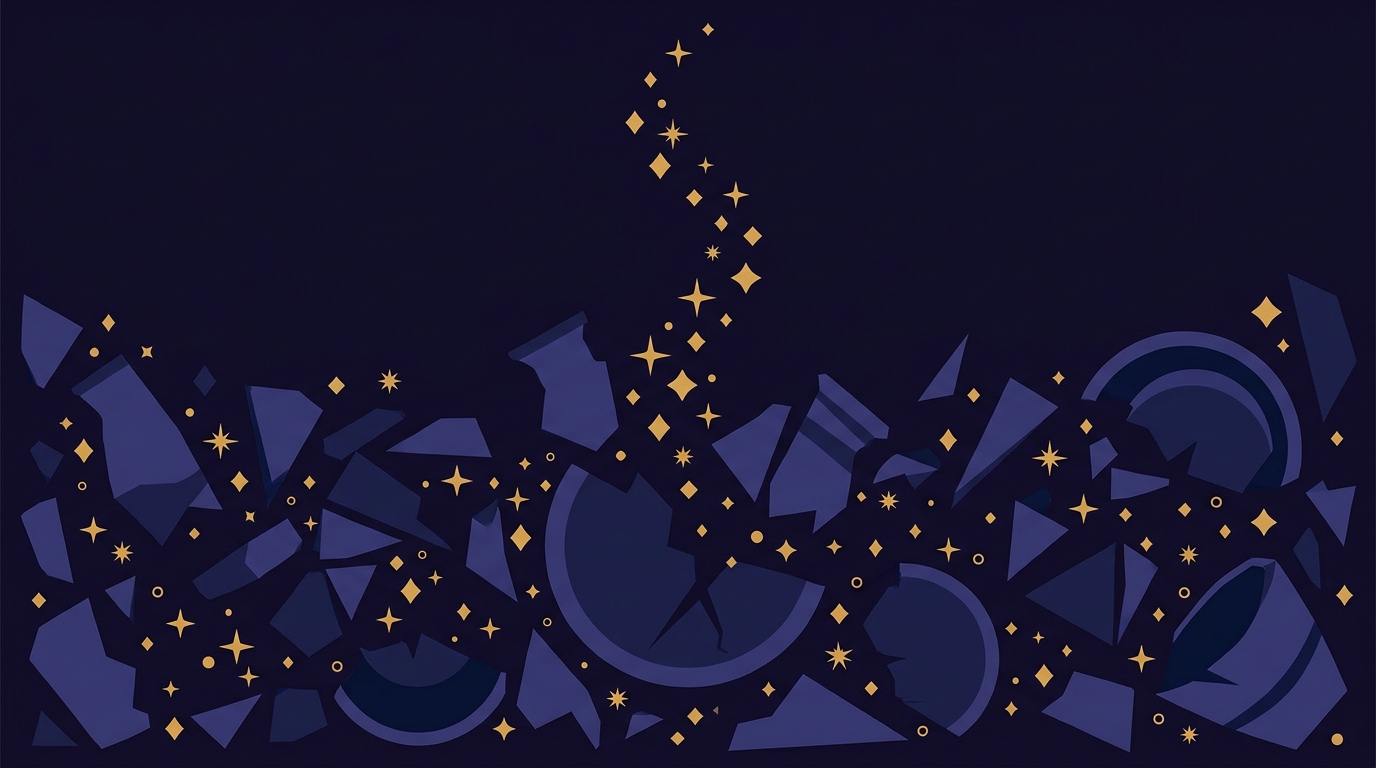
When the vessels broke, two things happened. The fragments of the vessels descended, and became the root of the kelipot (shells), the realm where Divine light is hidden and where evil takes hold. And sparks of the light itself, the nitzotzot, fell with them and were trapped among the shards.
This is the Arizal’s explanation of the mixture we see everywhere. Good and evil are entangled because the light fell into the place of the husks. Nothing in the world is entirely empty of light, and nothing in it is untouched by the fall.
Why it happened
The Kabbalists do not treat the breaking as an accident, since nothing in the Divine will is accidental. Several explanations appear in the tradition, and they agree on one point. A world that was finished and flawless would leave nothing for a person to do. By arranging that the original vessels could not hold, Hashem made a world that needs repair, and made human beings the ones who repair it. Receiving a gift you did not work for carries a kind of shame, which the Kabbalists call nahama dekissufa (the bread of shame). The broken world is the way a person gets to earn what he receives.
It is also worth saying what the account does not mean. Hashem does not change, and no Divine plan fails. The Kabbalists understood these descriptions as language for how the world is structured, and the language should be held carefully.
Tikkun, the repair
What came after the breaking was not a return to the beginning. The lights re-formed into Olam HaTikkun (the World of Repair), arranged in partzufim (configurations), which are stronger because they work as relationships and not as isolated points. The vessels of the world of repair are built to hold the light.
But the sparks are still scattered. The Arizal taught that every mitzvah (commandment) lifts some of them back, and that a person’s ordinary life, including eating, working, and speaking, contains sparks that are waiting for a Jew to treat them with holiness. This is the meaning of the work of birurim (sorting out, extracting the good from what hides it). The world is full of fragments, and they are asking to be returned.
What this does for the reader
The vessels broke because the light was great, and the pieces still carry it. That is why the Arizal treated the broken world as the place where the work is done.
What came after the breaking is described in the article on Partzufim, the work of repair in Tikkun Olam, and the shells that formed from the fragments in Kelipot and Nogah.